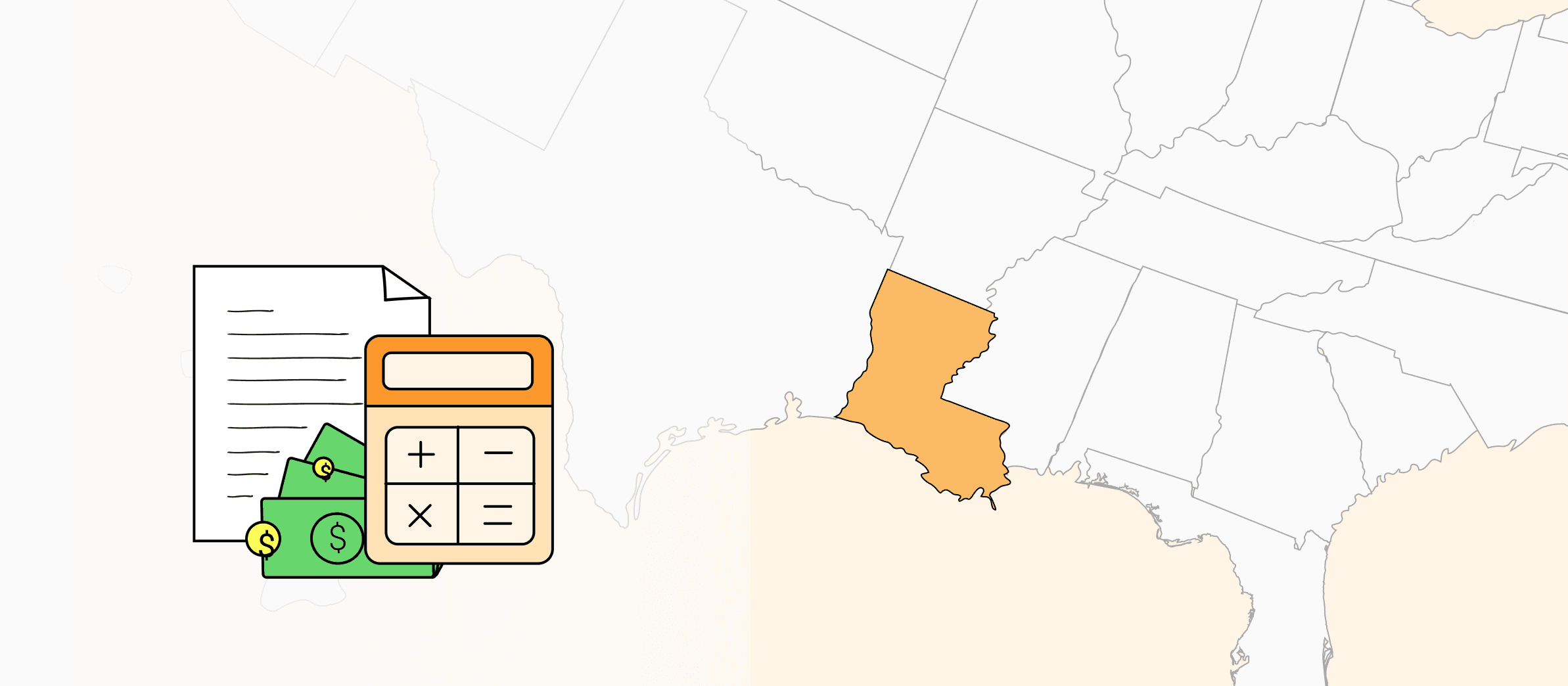
Louisiana landlords gain real value from understanding the security deposit law, as it helps them prevent common issues such as disagreements at move-out and confusion over lawful deductions.
To help, this guide walks through every key requirement, including maximum amounts landlords can request, how to store deposits, whether interest applies, legal reasons to deduct, returning deposits, handling disputes, and more.
Statutes Regulating Louisiana Security Deposits
Louisiana’s security deposit laws are outlined in Louisiana Revised Statutes Title 9, Sections 3251 through 3254, which govern how landlords collect deposits, process returns, make lawful deductions, and meet required obligations for residential leases.
Some cities and counties may have regulations that are more restrictive than those presented here. Always check local laws before collecting a security deposit.
Maximum Security Deposit Amounts Under Louisiana Law
| Quick Facts | Answer |
| Maximum / Limit | No Limit |
| Receipt Requirement | None |
| Inventory Requirement | None |
| Interest Requirement | None |
Louisiana law does not place a cap on security deposit amounts. Landlords may collect any sum they find reasonable, and this approach applies regardless of lease type, contract length, or other lease details.
Louisiana also does not offer notable exceptions that limit security deposit amounts for specific properties or situations. State law sets one consistent standard for all rental arrangements.
Security Deposit Storage Regulations
Louisiana law does not outline specific rules for storing security deposits. Landlords may choose any reasonable method to hold these funds, since the statutes do not require a specific account, a receipt, or notice to the tenant about where the deposit is kept.
Security Deposit Interest in Louisiana
Louisiana landlords do not need to place security deposits in interest-bearing accounts, since state law does not require interest to accrue on these funds.
Making Security Deposit Deductions
Security deposit deductions help landlords protect the property’s overall condition. Tenants sometimes cause damage beyond normal wear and tear, and landlords need reliable funds to complete repairs and return the unit to its previous condition.
When Landlords Can Deduct
Louisiana landlords may deduct from a tenant’s security deposit for these reasons:
- Damage exceeding normal wear and tear, as defined by state guidance
- Unpaid rent that remains outstanding after the lease term ends
- Costs to repair tenant-caused damage to fixtures, appliances, or flooring
- Charges tied to lease violations that create measurable financial loss
- Excessive cleaning needed to return the unit to a proper condition
When Landlords Can’t Deduct
Louisiana landlords may not deduct from a tenant’s security deposit for these reasons:
- Routine cleaning that reflects standard turnover between tenants
- Minor cosmetic issues that result from ordinary residential use
- Repairs required because of age, deterioration, or structural issues
- Upgrades or improvements that increase property value beyond its past condition
- Costs connected to landlord negligence or failure to meet maintenance duties
Necessary Documentation to Accompany Deductions
Louisiana landlords must provide tenants with an itemized statement that explains each security deposit deduction. State law does not require receipts, invoices, or other supporting paperwork, so the detailed list alone fulfills the requirement.
What to Do When Deductions are Greater Than the Deposit
Some tenants leave damage or unpaid rent that exceeds the security deposit amount. When this happens, landlords may request the remaining balance directly from the tenant and present clear documentation to support the charges. Louisiana law does not set a specific timeframe for collecting these additional amounts.
Landlords who cannot recover the balance may seek help through Louisiana small claims court, or hire a collections agency to pursue the debt on their behalf.
Returning Security Deposits to Tenants

Louisiana law outlines clear expectations for returning any remaining portion of a tenant’s security deposit after lawful deductions, which helps landlords handle the process consistently and avoid disputes.
Required Timeline for Return
Louisiana landlords must return the balance of the deposit and an itemized list of deductions within 1 month after the tenant moves out and provides a forwarding address. The 1-month period begins once the landlord receives the address after the move-out.
Method for Return
Louisiana landlords may use any reasonable payment method, such as a check or another secure method, when sending the remaining deposit. They must also include an itemized deduction list that explains how they determined the final amount.
Penalties for Late Return
If a landlord misses the 1-month deadline or wrongfully withholds the deposit, the tenant may recover actual damages. When a landlord acts in bad faith, courts may add a penalty of up to $300, along with reasonable attorney fees.
Security Deposit Disputes
Tenants who disagree with how a landlord handles their security deposit have every right to challenge the decision. They usually begin by contacting the landlord in writing to request clarification and, if necessary, pursue mediation or file a claim in the appropriate court.
As a landlord, prepare for security deposit disputes by using move-in and move-out checklists, accounting and bookkeeping, and a detailed lease agreement. Thorough documentation, a solid understanding of Louisiana laws, and strict compliance with required timelines also help landlords manage these situations more effectively.
Using Condition Reports to Document Damage

Landlords who manage security deposits in Louisiana should always use detailed move-in and move-out condition reports that track changes over time, support fair deductions, and simplify communication with tenants.
To do so, consider using property management software to create digital reports with photos and videos from a smartphone. Careful documentation at move-in and move-out strengthens a landlord’s position and helps make security deposit deductions iron-clad.
Sign up for a free TurboTenant account to simplify documentation and keep every property detail organized in one secure place.
FAQs: Louisiana Security Deposit Law
Can a landlord deduct painting from a security deposit in Louisiana?
A Louisiana landlord may deduct painting costs only when a tenant causes damage beyond normal wear and tear. Routine repainting that comes from everyday use does not qualify as a lawful deduction.
Are nail holes considered normal wear and tear in Louisiana?
Small nail holes usually count as normal wear and tear in Louisiana. A landlord may deduct only when holes are excessive, cause significant wall damage, or require more work than expected from typical use.
Does the landlord or tenant have to pay for carpet cleaning in Louisiana?
A Louisiana landlord may deduct carpet cleaning costs only when a tenant leaves excessive filth or damage. Standard carpet cleaning between tenants does not qualify as a lawful deduction and cannot come from the security deposit.
What happens if a landlord doesn’t return a security deposit within 30 days in Louisiana?
If a Louisiana landlord fails to return the deposit within 30 days of receiving the tenant’s forwarding address, the landlord may be liable for actual damages. When a landlord acts in bad faith, courts may also add a penalty of up to $300 plus reasonable attorney fees.