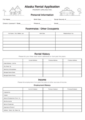
In a unique housing market that includes long-term residents, military families, and seasonal workers, an Alaska rental application helps landlords collect the information they need to make confident, informed decisions.
To simplify the process, many landlords rely on a sample rental application template or use an online platform like TurboTenant to collect and manage applications in one place.
Information to Collect
Typical information gathered through an Alaska rental form includes:
- Contact information, including email, phone number, and an emergency contact
- Full legal names of applicants, co-applicants, and any co-signers
- Date of birth
- Social Security number (SSN)
- Current and previous addresses
- Employment, rental, and income history
- Personal and professional references
- Information about pets or service animals
- Vehicle details
- Smoking status
Because a rental application form involves sensitive information, federal and state laws set clear limits on what landlords can ask, collect, and use during screening.
Next, let’s walk through a quick guide to screening tenants in Alaska.
Quick Guide to Screening a Tenant
Every rental situation is different, but a transparent screening process helps Alaska landlords make informed decisions and stay compliant. The steps below outline a practical approach for properties across the state, from Anchorage apartments to small-town homes.
1. Pre-Screen
Before applicants fill out a complete rental form, many Alaska landlords use a short pre-screening form to save time and quickly identify qualified leads.
Typical pre-screening questions include:
- Contact information
- Employment status
- Monthly income
- Self-reported credit score
- Desired move-in date
- Number of occupants
- Pets or service animals
- Smoking status
Pre-screeners help landlords quickly rule out applicants who don’t meet basic criteria while still ensuring fair consideration. However, this step doesn’t replace an Alaska rental application.
2. Conduct Showings
Once you’ve identified promising leads, the next step is to show the rental and meet prospective tenants. Doing so will help you gauge their reliability, professionalism, and overall fit for your property before moving forward with an application or lease.
3. Distribute and Collect Applications
After the showing, give interested renters an application form. Collect completed forms, any fees, and signed disclosures.
For efficiency, many landlords use a free online rental application to collect and manage information securely.
Alaska Application Laws
Each state has its own rules on what landlords can request and how they can use that information. In Alaska, federal fair housing laws apply alongside state protections and additional local ordinances in cities like Anchorage.
Source of income: The state’s fair housing laws do not include source of income as a protected class.
Criminal history: Under state law, landlords may consider the results of a criminal background check (ACLU of Alaska).
Eviction history: Alaska landlords can consider eviction history (ACLU of Alaska).
Sexual orientation & gender identity: Not protected statewide, but Anchorage’s local ordinance includes these protections along with familial status and age. Property owners in Anchorage must follow these local rules.
Portable tenant screening reports: Landlords are not required to accept portable tenant screening reports. (If you choose to allow them, state that policy clearly.)
Pets, ESAs, and Service Animals
Alaska’s pet rules protect its unique ecosystems, underscoring the importance of clear pet policies. If you allow pets, include a section in your application to note the animal’s type, breed, and number.
Pet information: In your application, ask whether applicants have pets, emotional support animals (ESAs), or service animals.
Fair Housing Act: Under federal law, landlords cannot:
- Discriminate against applicants because they have an ESA or service animal
- Charge pet rent, deposits, or fees for ESAs or service animals
- Deny housing based on an ESA or service animal’s breed, size, or weight
Federal Application Laws
Rental property managers must comply with the following federal regulations when collecting and using the information on an Alaska rental application:
Fair Credit Reporting Act (FCRA): Requires landlords to get written consent before running a credit report and to issue an adverse action notice if the application is denied based on credit history (15 U.S.C. §§ 1681-1681x).
Equal Credit Opportunity Act (ECOA): Prohibits discrimination based on protected classes or receipt of public assistance (15 U.S.C. § 1691).
Fair Housing Act (FHA): Bars discrimination based on race, color, religion, sex, national origin, familial status, or disability (42 U.S.C. § 3601).
Americans with Disabilities Act (ADA): Prohibits landlords from denying applications based solely on disability and requires reasonable accommodations (42 U.S.C. § 1210).
4. Use a Third-Party Screening Service
Using a trusted tenant screening service like TurboTenant simplifies credit and background checks. Alaska property owners can quickly and securely verify credit, criminal, and eviction history without handling sensitive data themselves.
5. Check Application References
Personal and professional reference checks give landlords valuable insight beyond what the application shows. Contact past managers or employers and ask:
- Would you rent to this tenant again?
- How many rent payments did the tenant miss, if any?
- What was their monthly rent?
- Did they maintain the property well?
- Were there any lease violations or issues?
6. Approve or Deny Applications
When accepting multiple applications, take the time to review each one carefully and apply your criteria consistently.
Consider:
- Rental history: A strong history of on-time payments and good landlord references is ideal. If an applicant has less than a year of solid rental history, some landlords require a co-signer.
- Rent-to-income ratio: For the rent-to-income ratio, rent exceeding 30% of a tenant’s gross income can increase the risk of missed payments.
- Credit score: Many landlords use a minimum credit score range of 600–670 as a general benchmark.
- Fact-check rental applications: Always fact-check. Any false information on an application is grounds for denial.
Denial Process
If you deny an application, ensure the process is fair, legal, and well-documented.
Denial notice: Alaska does not have specific state requirements for sending tenant rejection letters.
Credit/background denials: If you base the denial on credit or background information, the Fair Credit Reporting Act (FCRA) requires you to send an adverse action notice, which includes:
- The name and contact information of the reporting agency
- An explanation of the applicant’s right to dispute inaccurate information
Document storage: Keep denied applications and related records for several years to protect against discrimination claims.
Avoiding Fraud
Rental fraud doesn’t just happen in the big cities; rental property managers in Alaska must stay vigilant. Here are some best practices to implement:
- Verify photo IDs and employment documents
- Run credit, background, and eviction checks
- Contact employers and previous landlords directly
- Watch for inconsistencies or suspicious behavior
Alaska Rental Application FAQs
What is required to rent an apartment in Alaska?
Most landlords require a completed application, proof of income, rental history, and references. Credit and tenant background checks are also standard, especially for applicants relocating from out of state.
Do you have to pay to submit a rental application?
Yes, many Alaska landlords charge an application fee to cover screening costs.
What are the reasons a rental application can be denied?
Common reasons for denying an Alaska rental application include insufficient income, poor credit, negative references, incomplete information, or a concerning rental history.
How long does a landlord have to make a decision about a rental application?
Alaska law doesn’t set a deadline. Most landlords decide within a few business days, depending on references and the background check turnaround time.