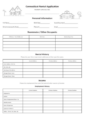
A Connecticut rental application provides landlords with a clear, consistent way to evaluate potential renters while remaining compliant with state landlord-tenant laws. Using a structured application template streamlines the process, keeps records organized, and helps you choose applicants who will care for your property and pay on time.
Information to Collect
When creating your Connecticut rental application, it can be helpful to review a sample first. A typical rental application form asks for:
- Contact details (including full name, phone, and email)
- Current and past residential addresses
- Move-in timeline
- Self-reported credit score or range
- Employment and income details
- Household size
- Smoking status
- Pet information (including service animals and ESAs)
- Professional and/or rental references
As a landlord, it’s your responsibility to securely handle all collected information and use it only for tenant screening.
Quick Guide to Screening a Tenant
Connecticut landlords must follow both state and federal rules when screening tenants. Here’s a step-by-step overview:
1. Pre-Screen
Before accepting complete applications, use a short pre-screening questionnaire to filter out applicants who don’t meet basic criteria (e.g., move-in date, household size, pets). The pre-screen saves time and focuses your attention on qualified leads.
Pre-screeners usually ask for:
- Name and contact information
- Desired move-in date
- Employment and income details
- Self-declared credit score
- Pet/service animal information and household size
Keep in mind, this is not a replacement for your rental form, but it’s a smart first step.
2. Conduct Showings
Host open houses or schedule private showings to meet applicants and show the rental unit. Meeting prospective tenants gives landlords valuable impressions beyond what’s on paper.
3. Distribute and Collect Applications
Once an applicant expresses interest, provide the complete Connecticut rental form. If you charge an application fee, disclose it clearly, since it’s typically non-refundable. Online free rental applications make this process faster, more secure, and more organized than handling paper forms.
Connecticut Application Laws
The Connecticut Fair Housing Act mirrors the federal Fair Housing Act. Still, it goes further by protecting additional classes, including age, marital status, sexual orientation, gender identity or expression, lawful source of income, and veteran status.
Landlords must apply screening criteria consistently and avoid discrimination based on these protected categories (Conn. Gen. Stat. § 46a-64).
Source of income: Connecticut prohibits landlords from denying applicants based on their lawful source of income, including housing vouchers, government assistance, or other subsidies.
Criminal history: Landlords must conduct an individualized assessment of criminal history rather than using blanket bans (Public Act 21-34).
Eviction history: Landlords may review eviction history, but they must apply the same criteria to all applicants
Sexual orientation & gender identity: Connecticut explicitly protects against discrimination based on sexual orientation and gender identity or expression (Conn. Gen. Stat. § 46a-64).
Portable tenant screening reports: Connecticut does not require landlords to accept portable tenant screening reports.
Pets, ESAs, and Service Animals
If you allow pets, include a dedicated section on your Connecticut rental application to collect relevant details. Landlords cannot discriminate against applicants with service animals or Emotional Support Animals (ESAs), but tenants are responsible for any damage those animals cause.
Pet information: Ask whether the applicant has pets, ESAs, or service animals, and request basic details like species, breed, and size.
Fair Housing Act: Prohibits discrimination based on the presence of a service animal or ESA. Landlords cannot charge pet deposits, pet rent, or additional fees for these animals, nor can they deny housing based on the animal’s breed, size, or weight.
Federal Application Laws
All landlords in Connecticut must comply with the following federal laws when collecting and using the information on a rental application:
Fair Housing Act (FHA): Prohibits discrimination based on race, color, national origin, religion, sex, familial status, or disability (42 U.S.C. § 3601).
Fair Credit Reporting Act (FCRA): Requires written consent before running a credit check and mandates an adverse action notice if you deny based on credit (15 U.S.C. §§ 1681-1681x).
Equal Credit Opportunity Act (ECOA): Prohibits discrimination against applicants who receive public assistance and regulates how to use credit information (15 U.S.C. § 1691).
Americans with Disabilities Act (ADA): Requires reasonable accommodations for tenants with disabilities (42 U.S.C. § 1210).
4. Use a Third-Party Screening Service
When handling sensitive applicant data, using a reputable third-party screening service helps ensure compliance with federal regulations and streamlines the process. Tenant screening tools allow Connecticut landlords to run credit and background checks quickly and securely.
5. Check Application References
Personal and professional reference checks provide landlords with valuable insights beyond what the rental application form shows. Contact past landlords or employers and ask:
- Would you rent to this tenant again?
- How many rent payments did the tenant miss, if any?
- What was their monthly rent?
- Did they maintain the property well?
- Were there any lease violations or issues?
6. Approve or Deny Applications
When accepting multiple applications, evaluate applicants based on consistent and objective criteria:
- Rental history: Evaluate the applicant’s rental history and require a co-signer if they’re new to renting or have limited experience.
- Rent-to-income ratio: Look for rent that stays below 30% of the applicant’s gross monthly income to maintain a healthy rent-to-income ratio.
- Credit score: Check for credit scores in the 600–670+ range, or apply reasonable standards that fit your property and market.
- Fact check: Verify all information thoroughly and deny forms that contain false or misleading details.
Denial Process
If you deny a Connecticut rental application, make sure your process is consistent, lawful, and well-documented to reduce legal risk and support fair housing compliance.
Denial notice: Connecticut law doesn’t require a formal tenant rejection letter.
Credit/Background denials: If you deny based on credit or background information, the FCRA requires an adverse action notice with the reporting agency’s details and the applicant’s right to dispute errors.
Document storage: Retain denied applications and screening records for at least 1–3 years to defend against potential discrimination claims.
Avoiding Fraud
Rental application fraud happens everywhere, including Connecticut. Protect yourself by:
- Verifying identity and income with official documents
- Running credit, eviction, and background checks
- Watching for inconsistencies or altered documents
- Calling previous landlords directly to confirm tenancy details
Connecticut Rental Application FAQs
What is required to rent an apartment in Connecticut?
Applicants must submit a completed rental application, pay any required fees, and provide identification and proof of income. Landlords may also request consent for credit and tenant background checks.
Do you have to pay to submit a rental application?
Yes. Connecticut landlords may charge a non-refundable application fee, provided it is reasonable and disclosed upfront.
What are the reasons a rental application can be denied?
Reasons for denying a rental form include: insufficient income, poor credit, adverse rental history, false information, or disqualifying criminal history.
How long does a landlord have to decide on a rental application?
There’s no set legal deadline, but most landlords decide within a few business days.